Disclosure
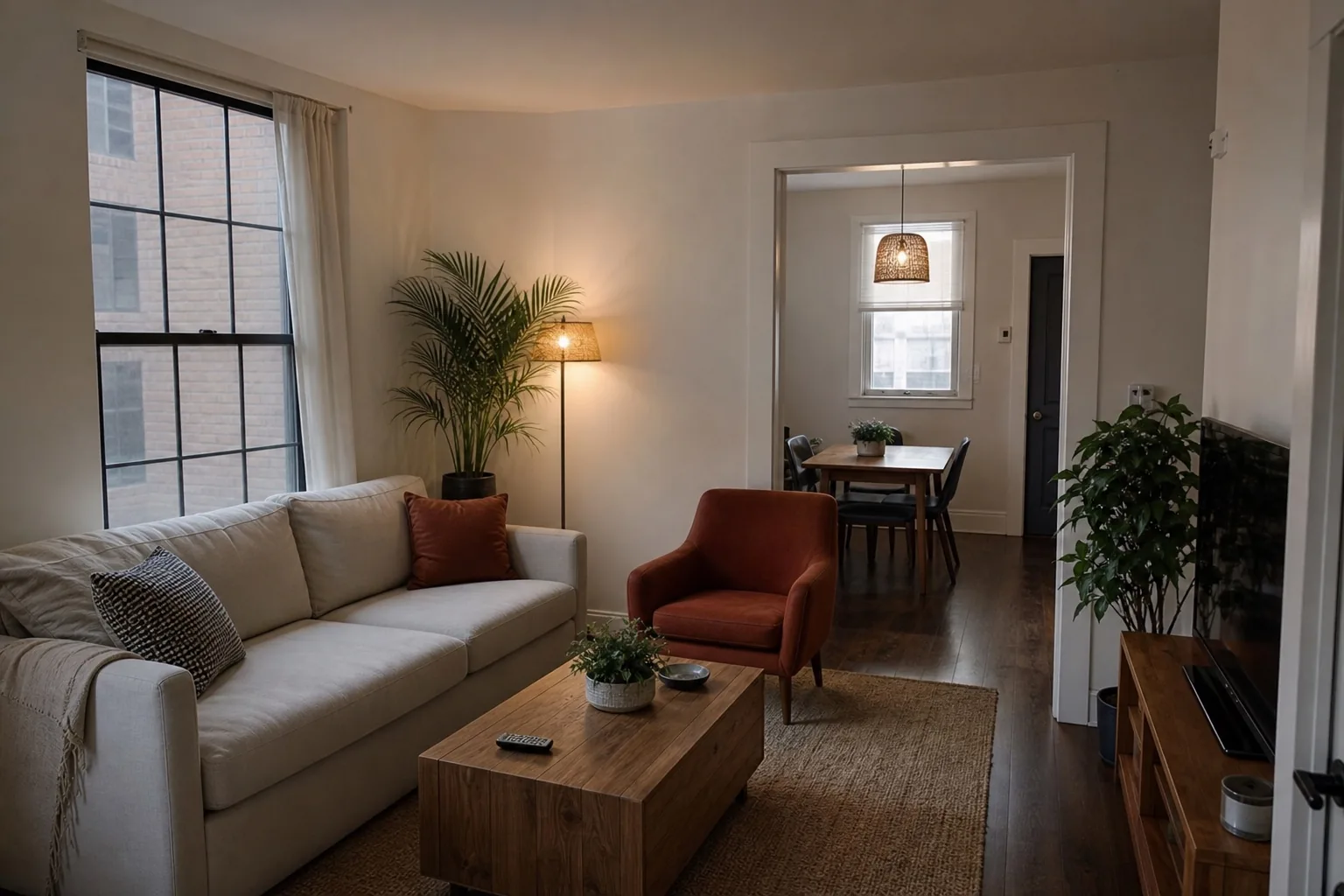
You have to say a photo is virtually staged.
Staged listing photos must be identified. The rules behind that, plus virtual staging disclaimer examples to adapt for your photos and listing text.
ListPik labels staged results by default so the obligation is not left to memory.

The problem
The rule is simple. Remembering it on photo forty is not.
Most advertising codes require that a materially altered image be identified as such. The failure is rarely deliberate. It is an unlabeled file that got copied into a gallery six weeks after it was made, by someone who was not there when it was staged.
Our method
Put the disclosure in the pixels as well as the listing.
ListPik burns a virtually-staged label into staged results by default. It survives the download, the re-upload to a portal, and the screenshot, which a caption in a listing field does not. You can switch it off when a listing needs a clean image, but the disclosure duty does not switch off with it, so put it in the listing text. Keep the unstaged original on file either way.
Where the obligation usually comes from
Disclosure requirements for staged imagery rarely come from a single rule. They typically arise from several directions at once: general advertising codes prohibiting misleading representations, MLS rules on photo alteration, brokerage policy, and in some jurisdictions specific real estate regulations. Marketplaces layer their own content policies on top.
Because the obligation is distributed, it is easy to satisfy one source and breach another. A portal that has no specific staging field does not thereby remove a state advertising duty, and a brokerage policy that permits staging does not override an MLS rule that requires labelling.
Why the label travels better than the caption
A disclosure written into a listing field is accurate at the moment of publication and fragile afterwards. Files get downloaded, re-uploaded to a second portal, sent to a printer, screenshotted, and shared. Each of those steps drops the caption while keeping the image, and the staged photo continues circulating with no indication that it is staged.
A label burned into the pixels survives every one of those transitions. This is why ListPik applies one by default rather than leaving it to the listing field, and why turning it off is a deliberate choice with a corresponding obligation to disclose in the text.
- Disclose in the listing text as well as on the image
- Keep the unstaged original archived against every staged photo
- Check MLS, brokerage, portal, and local advertising rules separately
- Re-confirm the rules periodically; they change
When the label has to come off
Some channels don't allow text on photos, so a burned-in label can break their rules. Stellar MLS in Florida prohibits "text, or graphics of any kind" in listing photos, except its own watermark. It asks for staging to be disclosed in three places instead: "Virtually staged" in the photo description, the virtually staged checkbox, and public remarks that open with "One or more photo(s) was virtually staged." CRMLS in California asks for the label in the photo description field, with the unaltered original immediately before or after.
Vrbo says it may reject photos with text overlays, and gives URLs and contact information as examples. A staging label isn't either of those, but it is text on the image. Where a channel restricts text on photos, download the clean file and disclose through that channel's own fields and the listing text.
- Stellar MLS: clean file, plus the photo description, checkbox, and remarks
- CRMLS: label in the photo description, original placed next to it
- Vrbo: text overlays can be rejected; disclose in the listing text
- Airbnb and other channels: the label on the photo works as a backstop
Virtual staging disclaimer examples
A useful disclaimer answers three questions: which photos are staged, what in them is digital, and whether any of it comes with the property. Put it where the photo is seen, on the image or in the caption beside it, and repeat it in the listing description. A line buried in the fine print does not do the job.
Adapt the wording below to the listing, then check it against your MLS, brokerage, and portal rules. Some MLSs also require the unstaged original to appear in the same listing.
- On the image: "Virtually staged"
- Photo caption: "Virtually staged. Furniture and decor are digital."
- Listing text: "Photos of the living room and primary bedroom have been virtually staged. The furniture shown is digital and is not included in the sale."
- Listing text, rental: "Some photos are virtually staged to show scale. The unit is offered unfurnished."
- With the original: "Virtually staged. The unstaged photo follows."
Where it fits
Use enhancement when the photograph is the problem.
The room is empty or barely furnished
There is no sofa, bed, or table in frame to give a viewer a sense of scale or function.
The property itself is fine
Walls, floors, windows, and condition are all presentable. What is missing is furniture, not repair.
You will disclose the staging
The listing will identify the photos as virtually staged, and the label on each result will travel with the file.
A three-part desk
Fast enough for the deadline. Deliberate enough for the listing.
- 01
Upload the original
Use the largest source file and choose an interior or exterior finishing direction.
- 02
Review the evidence
Inspect the result beside the source. The property should remain immediately recognizable.
- 03
Export with context
Download the approved image and follow the disclosure rules that apply to your listing.
Desk specification
What goes in, what comes back, and what to inspect.
Useful limits are part of a reliable workflow. Start from the best available source and approve the finished frame against visible property facts.
Before you publish
- Confirm the staged image carries a label or the listing text discloses staging.
- Check the disclosure survives download and re-upload to each portal used.
- Verify the unstaged original is archived and retrievable.
- Confirm current MLS, brokerage, and jurisdictional rules have been checked.
Specific answers
What to know before processing.
What should a virtual staging disclaimer say?+
Say which photos are virtually staged, that the furniture and decor in them are digital, and that they are not included with the property. For example: "Photos of the living room have been virtually staged. The furniture shown is digital and is not included in the sale."
Do I still need to write a disclosure in the listing?+
Yes. Most rules expect the listing text to identify staged photography regardless of what is on the image. Treat the label as a backstop, not a substitute, and as the only safeguard left if you turn it off.
Can I remove the label?+
Yes. It is on by default, and you can turn it off in the studio before staging when you need a clean image. Some channels require that: Stellar MLS bans text on listing photos. Removing the label does not remove the obligation, so disclose staging in the channel's own fields and in the listing text.
Does enhancement need the same disclosure?+
Enhancement corrects the photograph without changing the contents of the room, which is generally treated as lower risk. You are still responsible for truthful advertising, so follow the rules for your market.
Start with one frame
Let the comparison make the case.
Packs or optional monthly. One credit per finished photo. Review before you publish.
Open the studio