Empty rooms
Why empty rooms photograph smaller than they are.
A vacant room gives a viewer no scale reference. Furniture, even digital furniture, is what makes the dimensions readable.
Show how the space works without pretending it is a different space.
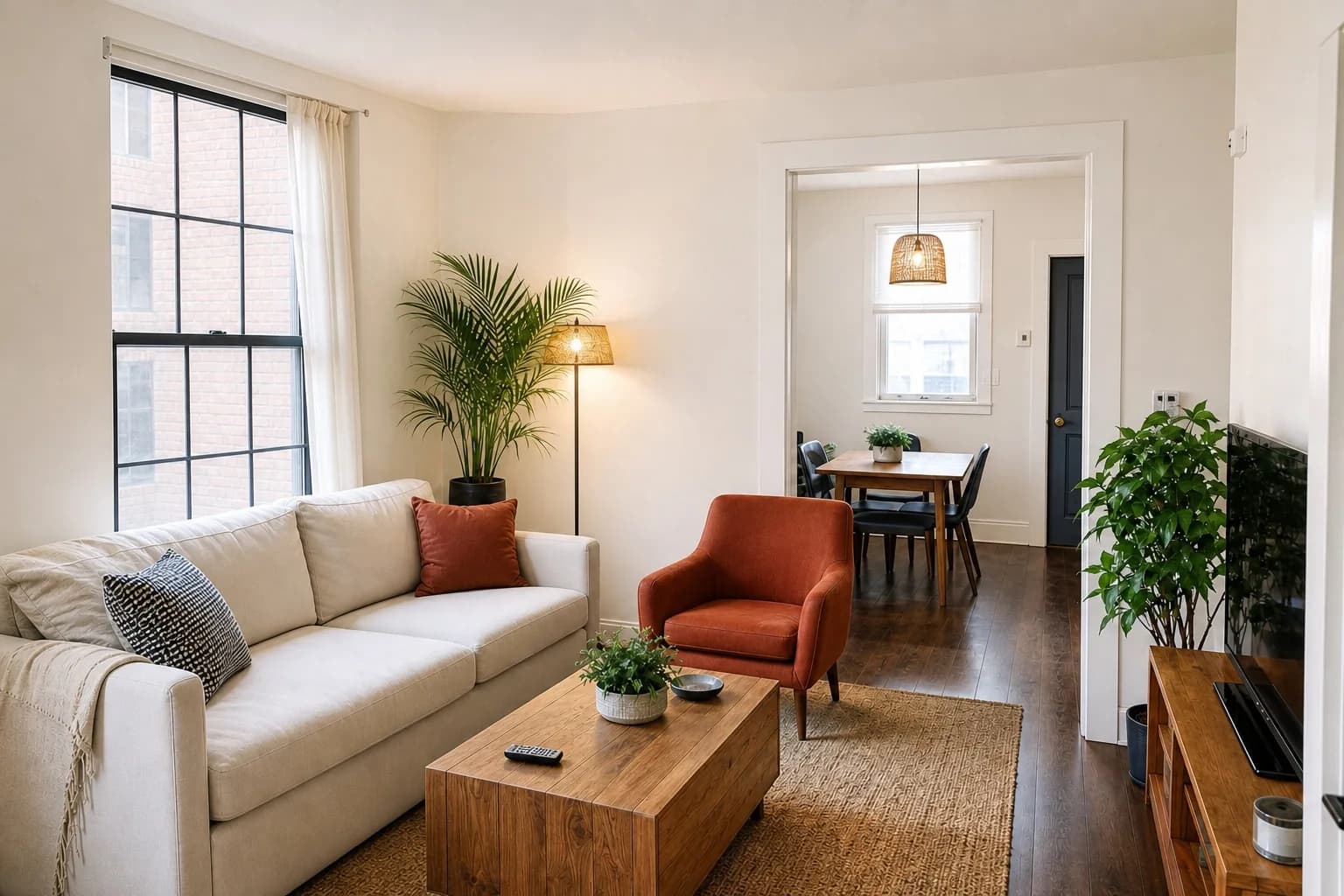
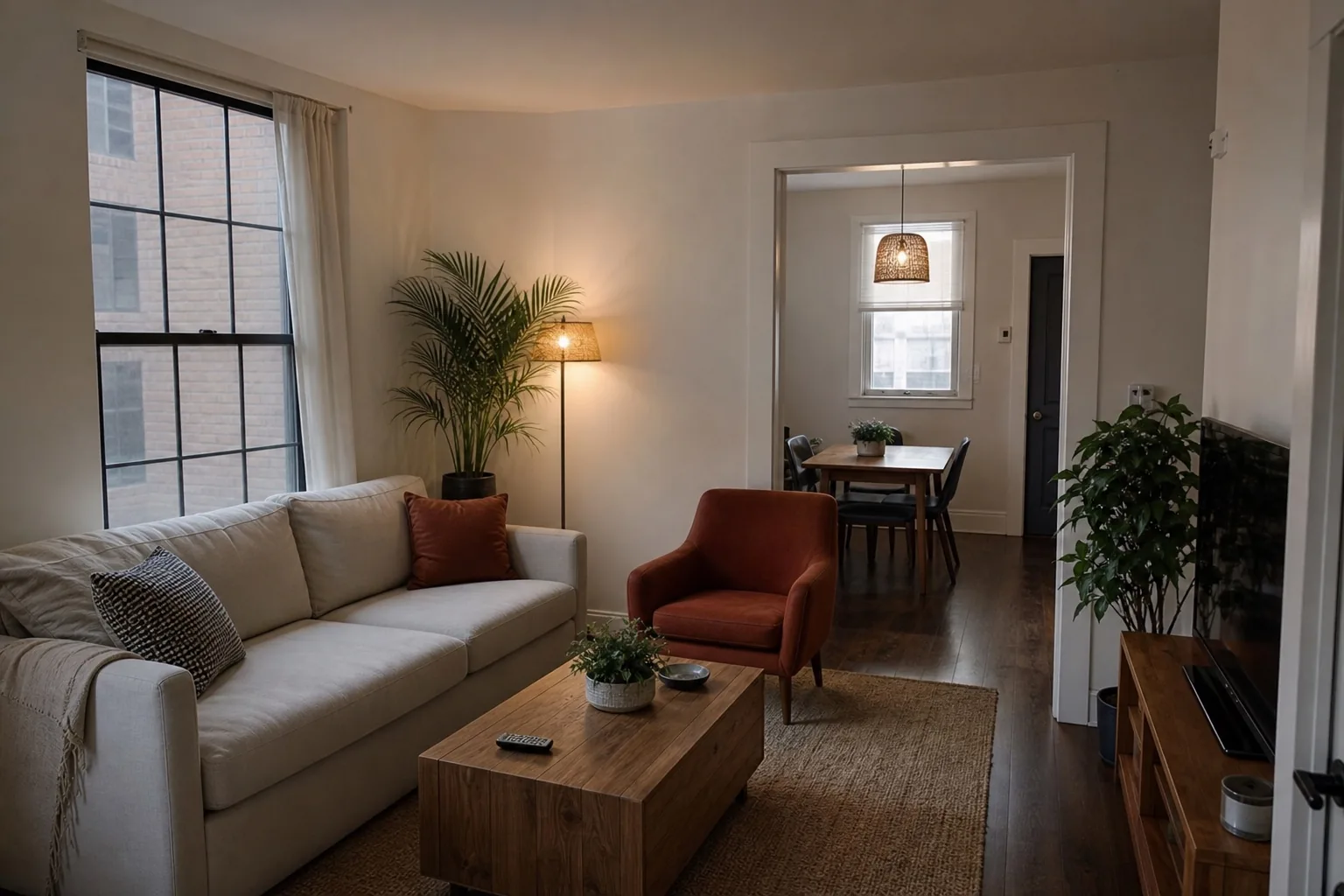
The problem
An empty room is a hard thing to judge.
Without a sofa or a bed in frame, a viewer has nothing to measure against. Vacant rooms consistently read as smaller, colder, and less specific than they are, and a wide lens makes the problem worse by stretching the corners.
Our method
Furniture at true scale, on the floor that is already there.
ListPik places pieces sized for the actual room, resting on the existing floor, lit by the light already in the photograph. Because the architecture is untouched, the staged frame and the original can be compared line by line, which is what makes the result defensible.
Why vacant rooms photograph badly
An empty room denies a viewer every reference they normally use to judge space. There is no sofa to measure the wall against, no bed to establish the depth, and no rug to tell where the usable floor stops. Viewers fall back on the only cues left — the door and the window — which consistently makes rooms read smaller than they are.
Empty rooms also read colder. Bare floors and walls produce hard reflections and long unbroken surfaces, and without soft furnishings to absorb light, the same room that feels warm in person photographs as an institutional space. Both effects work against the property, which is what makes staging a correction rather than an embellishment.
Which rooms are worth the credit
Not every empty room benefits equally. The main living space and the primary bedroom carry the most weight in a gallery and gain the most from a scale reference, because those are the rooms buyers are trying hardest to picture themselves in. A vacant utility room or a box room gains very little.
There is also a completeness argument for consistency. Staging two rooms in a set of eight and leaving the rest bare produces a gallery that reads as inconsistent. Either stage the rooms that carry the listing, or stage them all in one style.
- Stage the main living space and primary bedroom first
- Use one style across every staged room in the listing
- Do not stage rooms where damage or condition needs to be visible
- Keep the unstaged original for every staged frame
Where it fits
Use enhancement when the photograph is the problem.
The room is empty or barely furnished
There is no sofa, bed, or table in frame to give a viewer a sense of scale or function.
The property itself is fine
Walls, floors, windows, and condition are all presentable. What is missing is furniture, not repair.
You will disclose the staging
The listing will identify the photos as virtually staged, and the label on each result will travel with the file.
A three-part desk
Fast enough for the deadline. Deliberate enough for the listing.
- 01
Upload the original
Use the largest source file and choose an interior or exterior finishing direction.
- 02
Review the evidence
Inspect the result beside the source. The property should remain immediately recognizable.
- 03
Export with context
Download the approved image and follow the disclosure rules that apply to your listing.
Desk specification
What goes in, what comes back, and what to inspect.
Useful limits are part of a reliable workflow. Start from the best available source and approve the finished frame against visible property facts.
Before you publish
- Confirm furniture scale reads correctly against doors and windows.
- Check any damage, staining, or wear in the original is still visible.
- Verify furniture sits flat on the floor rather than floating above it.
- Confirm the architecture matches the original line for line.
Specific answers
What to know before processing.
Will the room look bigger than it is?+
It should not. Furniture is placed at believable scale precisely so the dimensions read correctly. Oversized-looking furniture in a small room is the classic tell of careless staging.
Can I stage a room with damage in it?+
You can stage it, but the damage will still be there. The prompt is written to preserve visible condition rather than cover it, which is both an advertising duty and the reason the result holds up at a viewing.
Which rooms are worth staging?+
Usually the main living space and the primary bedroom. Those carry the most weight in a listing gallery and benefit most from a scale reference.
Start with one frame
Let the comparison make the case.
Packs or optional monthly. One credit per finished photo. Review before you publish.
Open the studio