Styles
Six staging styles, and how to pick one.
Choose from modern, scandinavian, mid-century, coastal, farmhouse, minimal furnishing directions, matched to the property and its likely buyer.
Match the furniture to the building, not to your own taste.
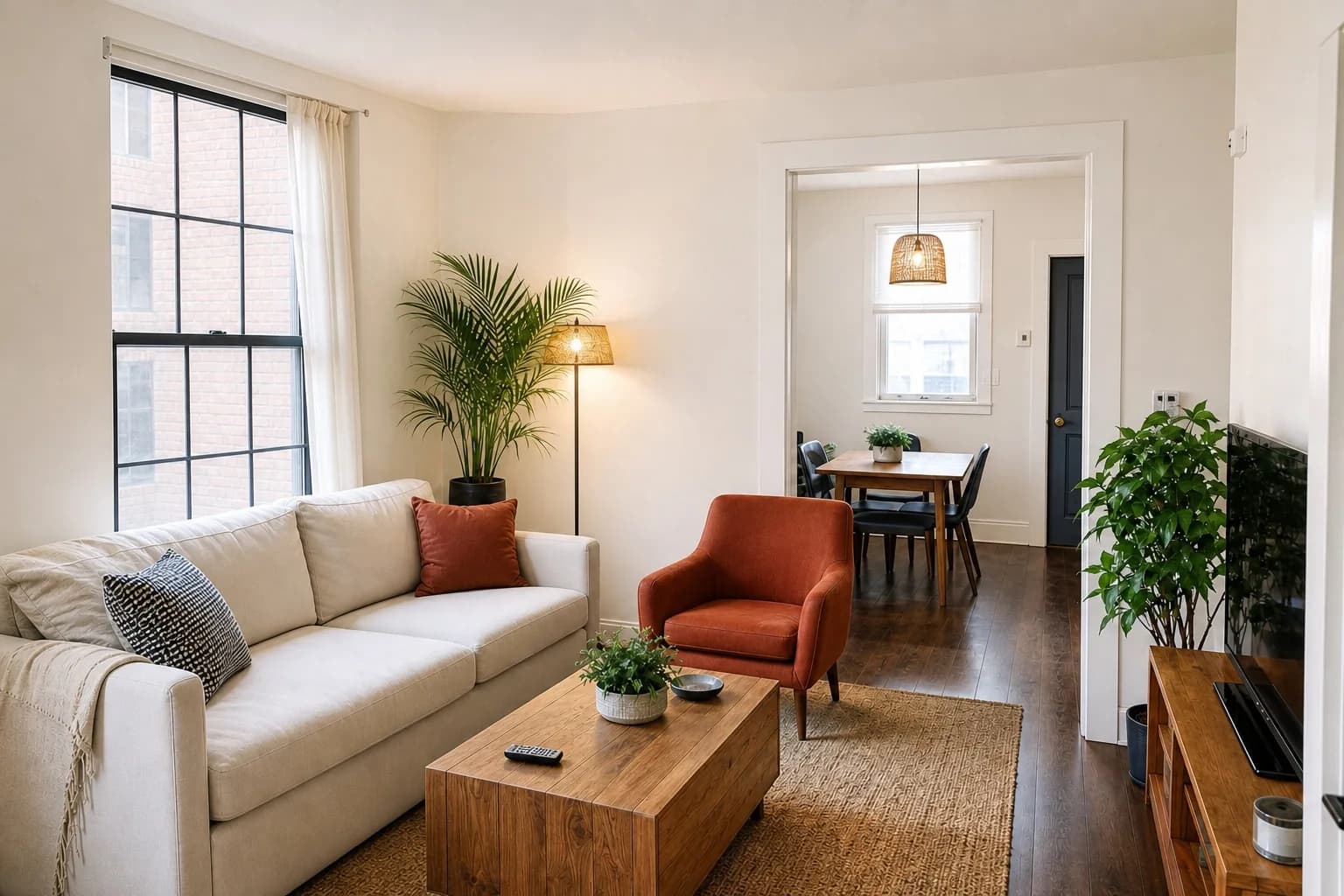
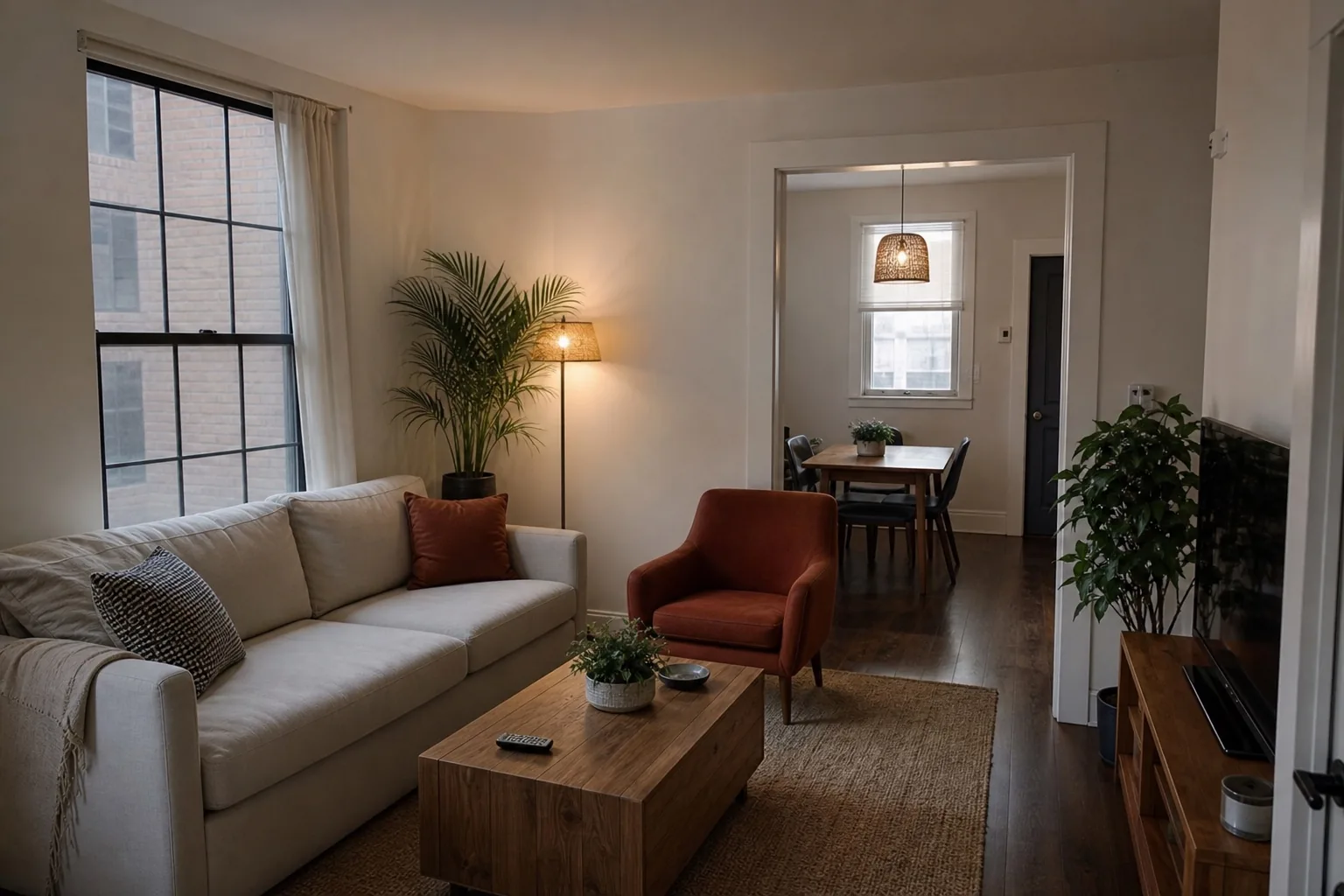
The problem
The wrong style makes a real room look fake.
Mid-century walnut in a new-build apartment, or minimalist concrete in a period cottage, reads as a rendering rather than a home. Viewers may not name the mismatch, but they register it, and it undermines the photographs that were accurate.
Our method
Start from the architecture.
ListPik offers Modern, Scandinavian, Mid-century, Coastal, Farmhouse, Minimal. Pick the direction that suits the building's period and the likely buyer, then use the same style across the whole listing so the gallery reads as one property.
The building decides, not your taste
Style mismatch is the most common reason a staged room reads as fake. Mid-century walnut in a new-build apartment, industrial concrete in a period cottage, or heavy farmhouse pieces in a compact city flat all produce the same effect: the furniture and the architecture are arguing, and the viewer resolves the argument by deciding the image is a rendering.
The reliable method is to read the building first. Period, ceiling height, window proportion, and floor material narrow the plausible options quickly, and the likely buyer or guest narrows them further. A family house in a suburb and a studio in a city centre want different furniture even in the same architectural style.
One style, one listing
Staging different rooms of the same property in different styles produces a gallery that reads as several homes. This is more jarring than any individual style choice, because viewers move through a gallery expecting continuity and the break registers immediately even when each frame is good on its own.
Where a style choice is genuinely uncertain, staging the same room twice and comparing costs one extra credit and settles it. What should not happen is publishing both, or resolving the uncertainty differently in different rooms.
- Read the building's period and proportions before choosing
- Use one style across every staged room in the listing
- Prefer restrained, neutral directions for the widest appeal
- Stage twice and compare if the choice is genuinely unclear
Where it fits
Use enhancement when the photograph is the problem.
The room is empty or barely furnished
There is no sofa, bed, or table in frame to give a viewer a sense of scale or function.
The property itself is fine
Walls, floors, windows, and condition are all presentable. What is missing is furniture, not repair.
You will disclose the staging
The listing will identify the photos as virtually staged, and the label on each result will travel with the file.
A three-part desk
Fast enough for the deadline. Deliberate enough for the listing.
- 01
Upload the original
Use the largest source file and choose an interior or exterior finishing direction.
- 02
Review the evidence
Inspect the result beside the source. The property should remain immediately recognizable.
- 03
Export with context
Download the approved image and follow the disclosure rules that apply to your listing.
Desk specification
What goes in, what comes back, and what to inspect.
Useful limits are part of a reliable workflow. Start from the best available source and approve the finished frame against visible property facts.
Before you publish
- Confirm the style suits the building's period and proportions.
- Check every staged room in the listing uses the same direction.
- Verify walls, flooring, and joinery were not changed by the style choice.
- Confirm furniture scale suits the room rather than the style reference.
Specific answers
What to know before processing.
Which style is safest?+
Modern or Scandinavian suit the widest range of properties because both use restrained shapes and neutral palettes that do not fight the architecture.
Should every room use the same style?+
Yes. A gallery that switches direction between rooms reads as several different homes, which is exactly the impression staging should avoid.
Can I try more than one style on a room?+
Each run costs one credit, so you can stage the same room twice and compare. Publish only one.
Start with one frame
Let the comparison make the case.
Packs or optional monthly. One credit per finished photo. Review before you publish.
Open the studio