Bedroom photo enhancement
Make bedroom photos read calm, bright, and honestly sized.
Balance bedside lamps against window light, keep bedding colour truthful, and show storage without stretching the room.
A bedroom that looks restful rather than merely bright.
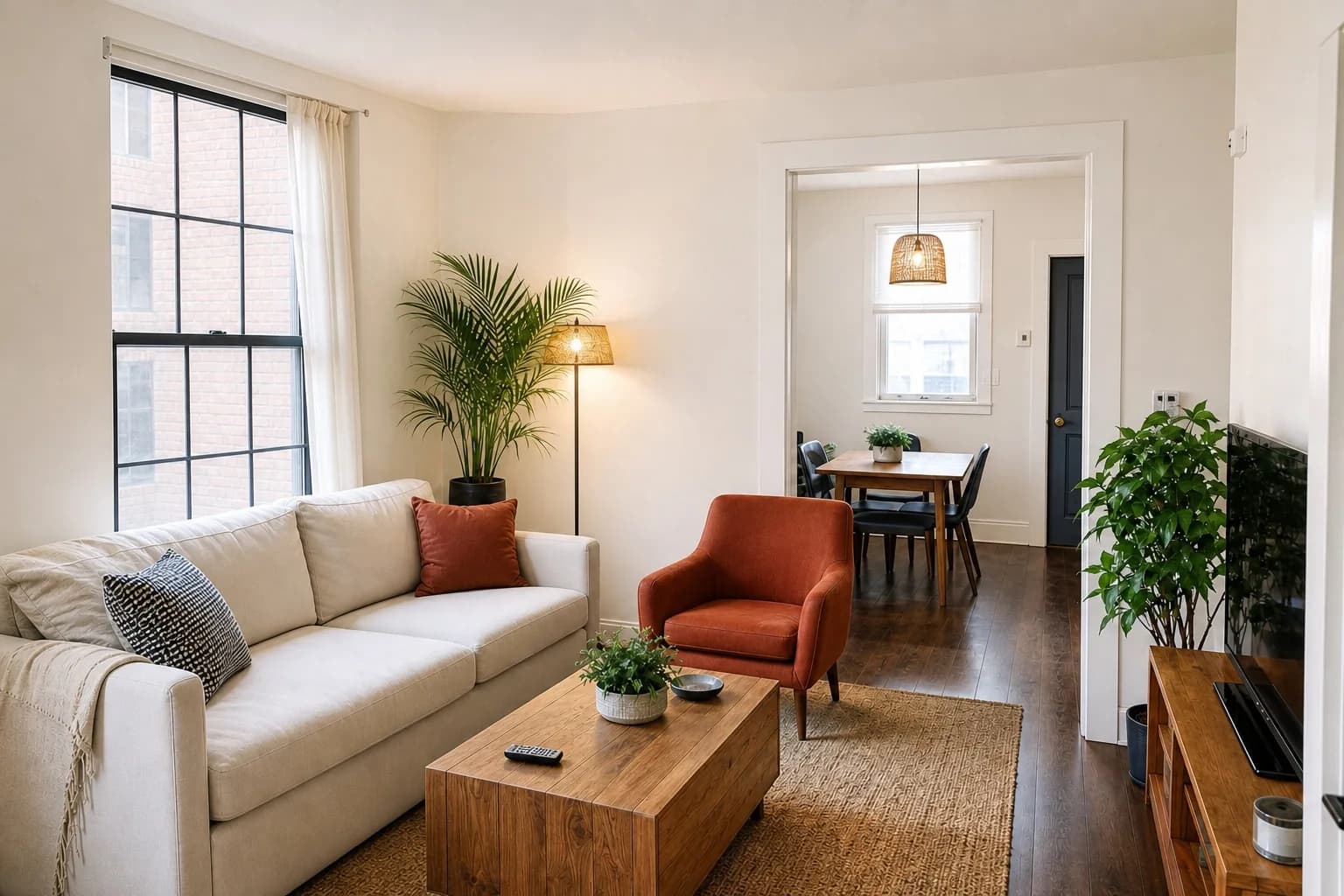
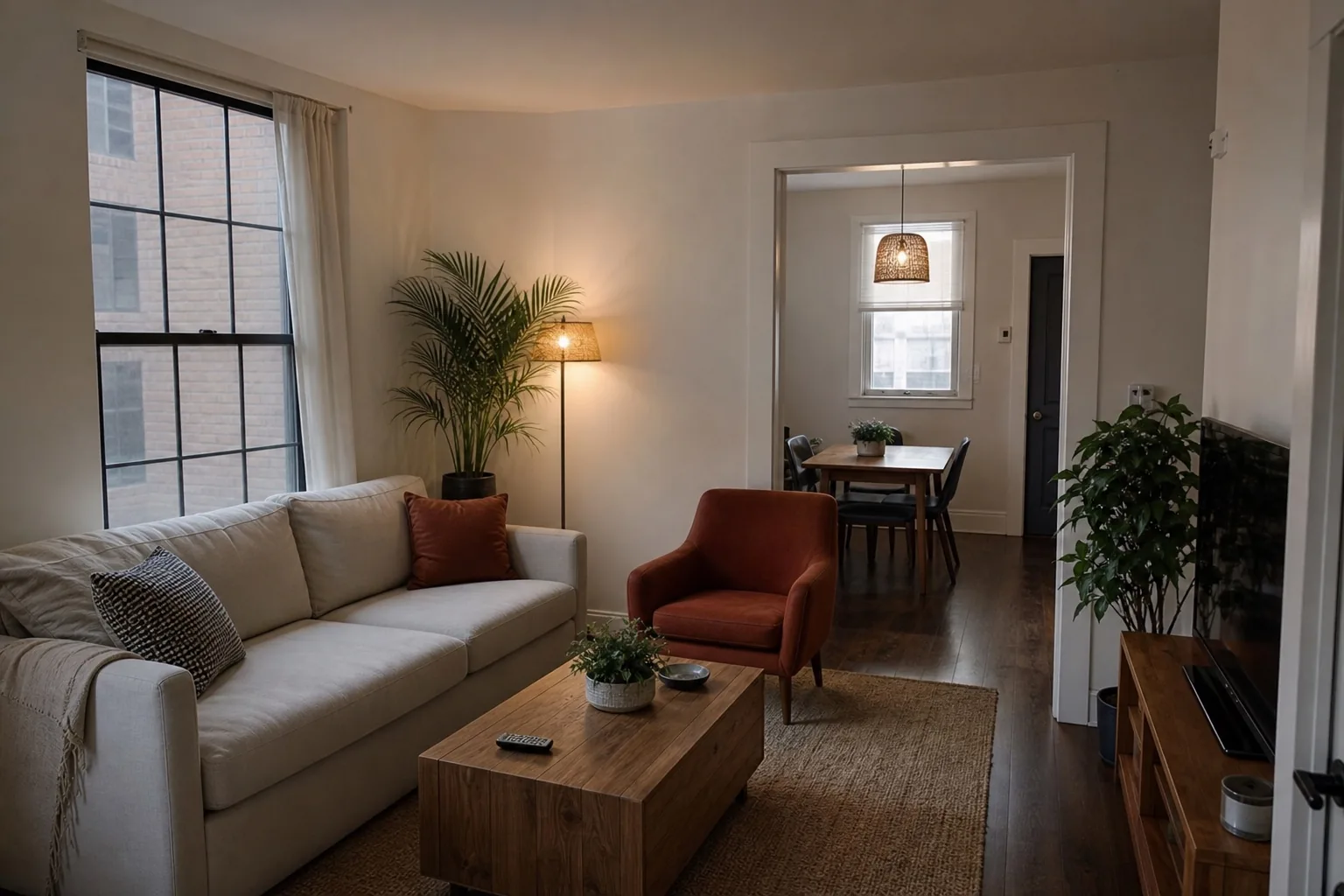
The problem
Bedrooms are lit by two different colours of light at once.
A bedside lamp is warm, the window behind it is cool, and the camera averages the two into an orange bed in a blue room. Auto white balance usually picks one and abandons the other, which is why so many bedroom photos have cream bedding that photographs as beige and grey walls that photograph as lilac.
Our method
Set the neutral from the bedding, then recover the window.
ListPik reads the bedding and wall as the likely neutral surfaces and balances the frame around them, then lifts the shadow side of the room without clipping the window. Lamps stay warm because a bedroom should look like evening when it was shot in the evening.
Guests are reading the bed, not the room
A bedroom photo answers one question before any other: will I sleep well here. That judgement is made from the bed itself — whether the linen looks clean, whether the mattress looks supported, whether the headboard is against a wall rather than a window, and whether there is somewhere to put a glass of water. A technically excellent photograph of a bedroom that crops the foot of the bed has failed at the only job it had.
This is why bedroom photos survive being slightly darker than other rooms. A living room needs to look spacious and a kitchen needs to look clean, but a bedroom needs to look restful, and rest photographs warm. Correcting a bedroom to daylight neutral often makes it look like a hotel corridor.
Small bedrooms and the doorway problem
Second and third bedrooms are usually shot from the doorway because there is nowhere else to stand. That puts the camera at the narrow end of the room with a wide lens, which stretches the near corner of the bed and compresses the far wall. The room looks longer and thinner than it is, and the wardrobe on the near wall disappears out of frame entirely.
Perspective correction fixes the leaning walls but cannot recover the wardrobe. If storage is a selling point, it needs a second frame. A corrected photo of half the room is still a photo of half the room.
- Shoot from the corner beside the door rather than square in the doorway
- Keep the camera at about chest height so the bed does not tower
- Include at least one full wardrobe or storage wall in the set
- Turn bedside lamps on and the overhead light off
Where it fits
Use enhancement when the photograph is the problem.
Two light sources are fighting
A warm bedside lamp and a cool window are in the same frame and the camera picked the wrong one.
The room is small but honest
The bed and storage are genuinely in frame; the photo just needs geometry and exposure corrected.
Evening atmosphere is the point
The shot was taken with lamps on deliberately and should not be corrected into daylight.
A three-part desk
Fast enough for the deadline. Deliberate enough for the listing.
- 01
Upload the original
Use the largest source file and choose an interior or exterior finishing direction.
- 02
Review the evidence
Inspect the result beside the source. The property should remain immediately recognizable.
- 03
Export with context
Download the approved image and follow the disclosure rules that apply to your listing.
Desk specification
What goes in, what comes back, and what to inspect.
Useful limits are part of a reliable workflow. Start from the best available source and approve the finished frame against visible property facts.
Before you publish
- Compare bedding colour against the original — cream must not have drifted to yellow or grey to blue.
- Confirm the bed is fully in frame and its size is not exaggerated by the near corner.
- Check that wardrobes, drawers, and storage visible in the source are still visible.
- Verify the window still shows the same outlook, not a brighter or emptier one.
Specific answers
What to know before processing.
Why does white bedding photograph yellow?+
Because the bedside lamp is around 2700K and the camera is averaging it with daylight from the window. Correcting white balance against the bedding itself restores the colour a guest will actually see.
Should the overhead light be on for bedroom photos?+
Usually not. Ceiling lights flatten the room and add a third colour temperature. Bedside lamps plus available daylight give a warmer, more legible result.
Can enhancement make a small bedroom look bigger?+
It can straighten verticals and recover the corners, which makes a room read as more ordered. It cannot and should not widen the room, move the walls, or crop out the constraint.
Start with one frame
Let the comparison make the case.
Packs or optional monthly. One credit per finished photo. Review before you publish.
Open the studio