Exterior photo enhancement
Recover curb appeal without relocating the property.
Balance a facade against a bright sky, restore landscape colour, and level the horizon while the setting stays exactly as it is.
A good-weather version of the same street, not a different one.
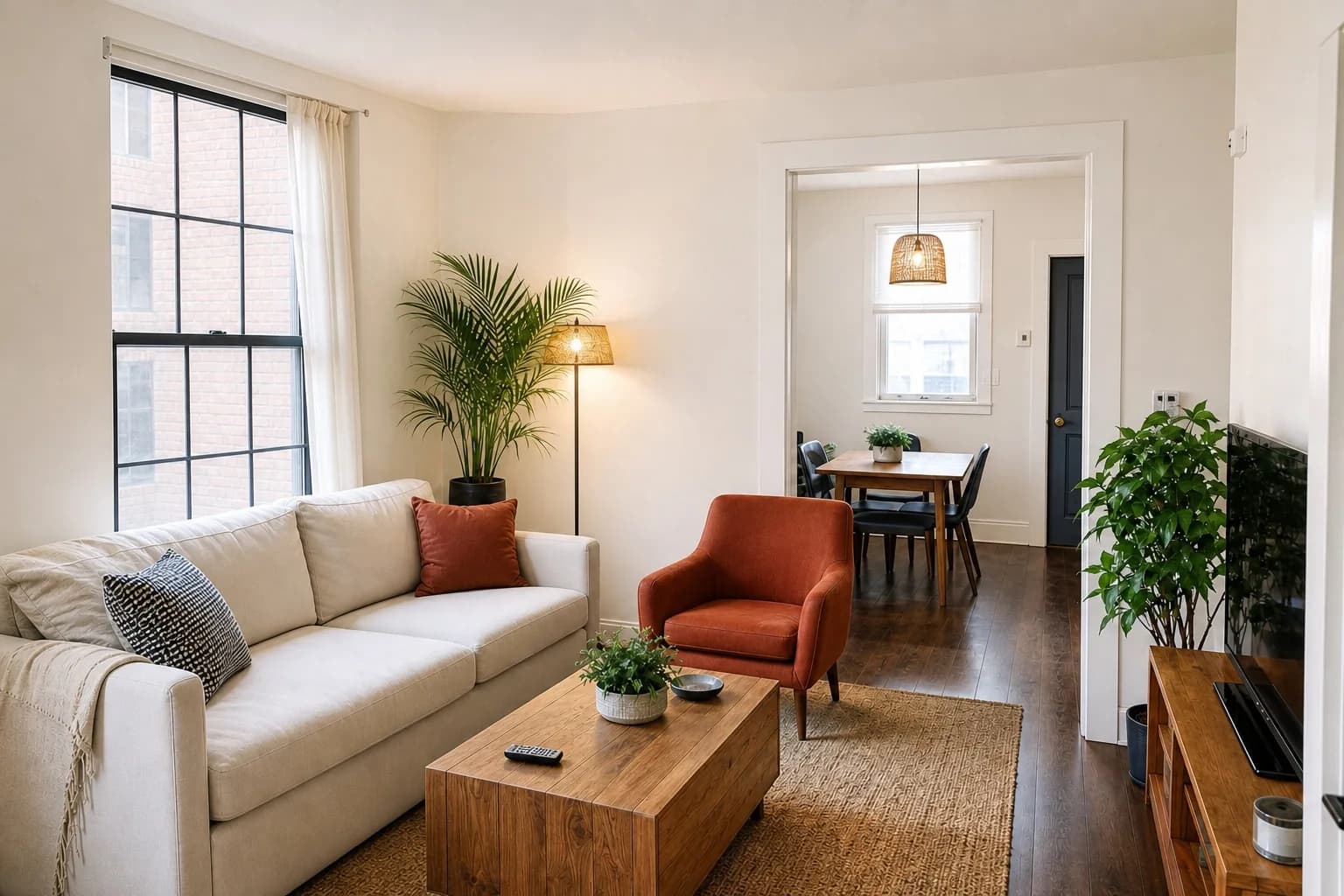
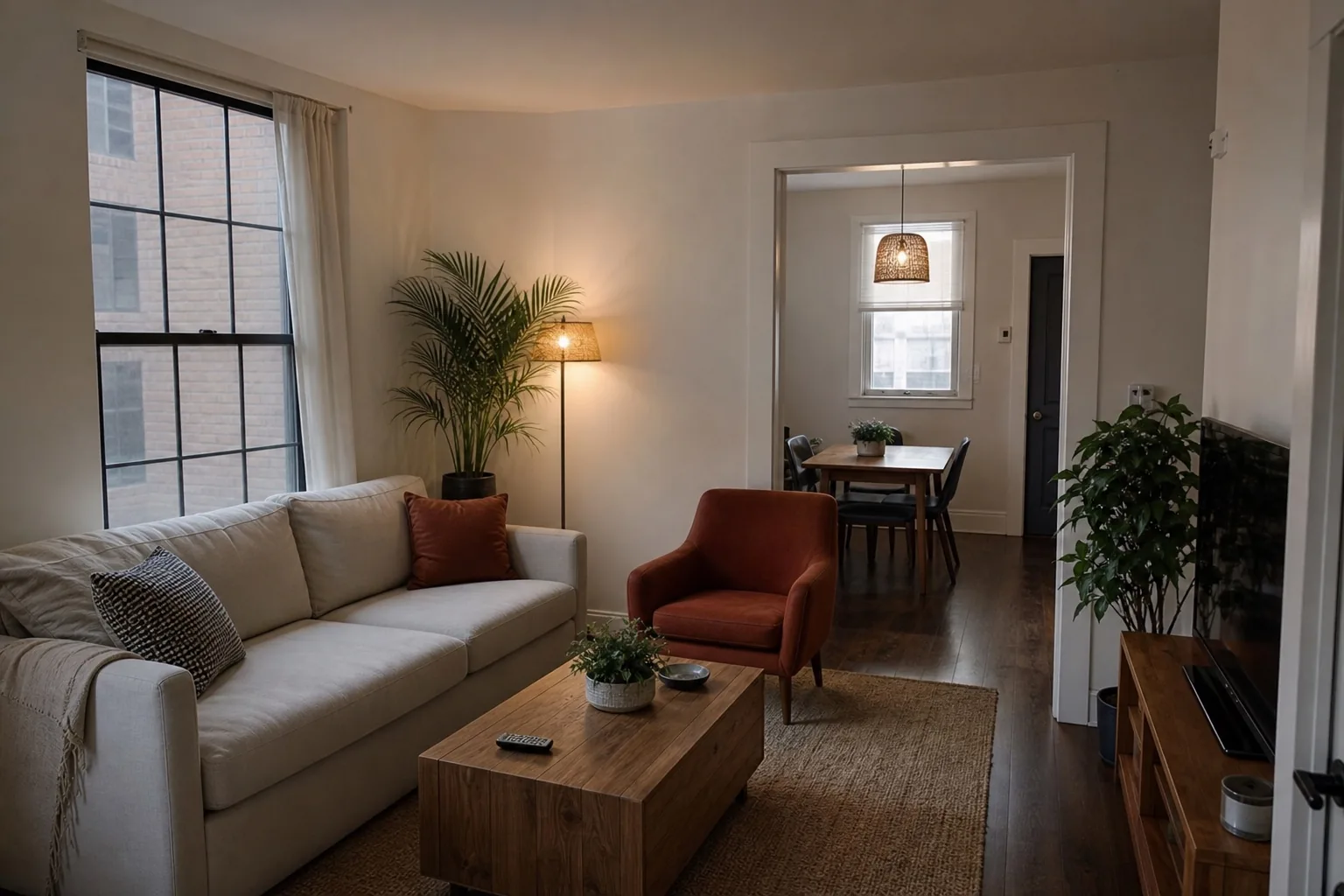
The problem
The sky is four stops brighter than the house.
Expose for the sky and the facade goes to silhouette. Expose for the facade and the sky goes to featureless white. Overcast days remove the problem by removing the contrast, but they also remove the shadow that gives a building its shape, which is why grey-day exteriors look flat rather than merely dull.
Our method
Balance the facade, then treat the sky as part of the same light.
ListPik lifts the building out of shadow and controls the sky in one pass so the two belong to the same photograph. Where a sky is replaced, the replacement matches the direction and quality of light already falling on the facade — a hard blue sky pasted over a building lit by flat overcast reads as fake to anyone who looks at the shadows.
Shadow direction is the tell
The most common failure in exterior editing is a sky that disagrees with the building beneath it. If the facade is lit flatly from an overcast sky and the replacement sky has a strong sun low on the left, the image contains two mutually exclusive lighting conditions. Most viewers cannot articulate what is wrong, but they register the image as processed, which undermines every other photo in the set.
A restrained sky that stays soft and slightly overcast is almost always more useful than a dramatic one. The goal is to give the roofline something to sit against and to stop the eye falling out of the top of the frame, not to relocate the property to a better climate.
What has to stay in the frame
Exterior photos carry more factual weight than any interior. They establish the boundary, the parking, the access, the immediate neighbours, and the aspect. A crop that removes the neighbouring wall, or a sky treatment that removes a pylon, changes what is being sold. These are the edits that generate complaints and, in some markets, regulatory problems.
Bins, cars, and hoses are a separate category. Moving a wheelie bin before the shot is good practice. Removing it afterwards is defensible only because it is not a permanent feature of the property. Removing an extension, a boundary fence, or a neighbouring roofline is not.
- Shoot with the sun behind or beside you, not behind the building
- Move cars and bins before shooting rather than relying on cleanup
- Include enough of the plot for the boundary to be legible
- Take one frame at the golden hour if the facade faces the right way
Where it fits
Use enhancement when the photograph is the problem.
The sky went white
The facade is correctly exposed but the sky above it holds no detail at all.
The facade is in shadow
The building was shot against the light and has gone dark against a bright background.
The weather was flat
Nothing is wrong with the property; the day removed all the modelling from the architecture.
A three-part desk
Fast enough for the deadline. Deliberate enough for the listing.
- 01
Upload the original
Use the largest source file and choose an interior or exterior finishing direction.
- 02
Review the evidence
Inspect the result beside the source. The property should remain immediately recognizable.
- 03
Export with context
Download the approved image and follow the disclosure rules that apply to your listing.
Desk specification
What goes in, what comes back, and what to inspect.
Useful limits are part of a reliable workflow. Start from the best available source and approve the finished frame against visible property facts.
Before you publish
- Compare shadow direction on the building against the light implied by the sky.
- Confirm neighbouring properties, boundaries, and access are unchanged from the source.
- Check the roofline for haloing where the sky meets tiles, aerials, and branches.
- Verify landscaping and season match the source — no summer lawn on a winter shoot.
Specific answers
What to know before processing.
Is sky replacement allowed on property listings?+
Rules vary by marketplace and jurisdiction. Sky treatment is generally treated as presentation rather than material alteration, but it must not imply a different aspect, outlook, or season.
Can I remove a neighbour's car from my exterior photo?+
A parked car is not a permanent feature, so removing one is usually defensible. Removing a building, fence, boundary, or permanent structure is not.
What time of day is best for exteriors?+
Whenever the sun is behind or beside the camera rather than behind the building. For a north-facing facade an overcast day is often more workable than harsh direct sun.
Start with one frame
Let the comparison make the case.
Packs or optional monthly. One credit per finished photo. Review before you publish.
Open the studio