Window view recovery
Balance bright windows without losing the room.
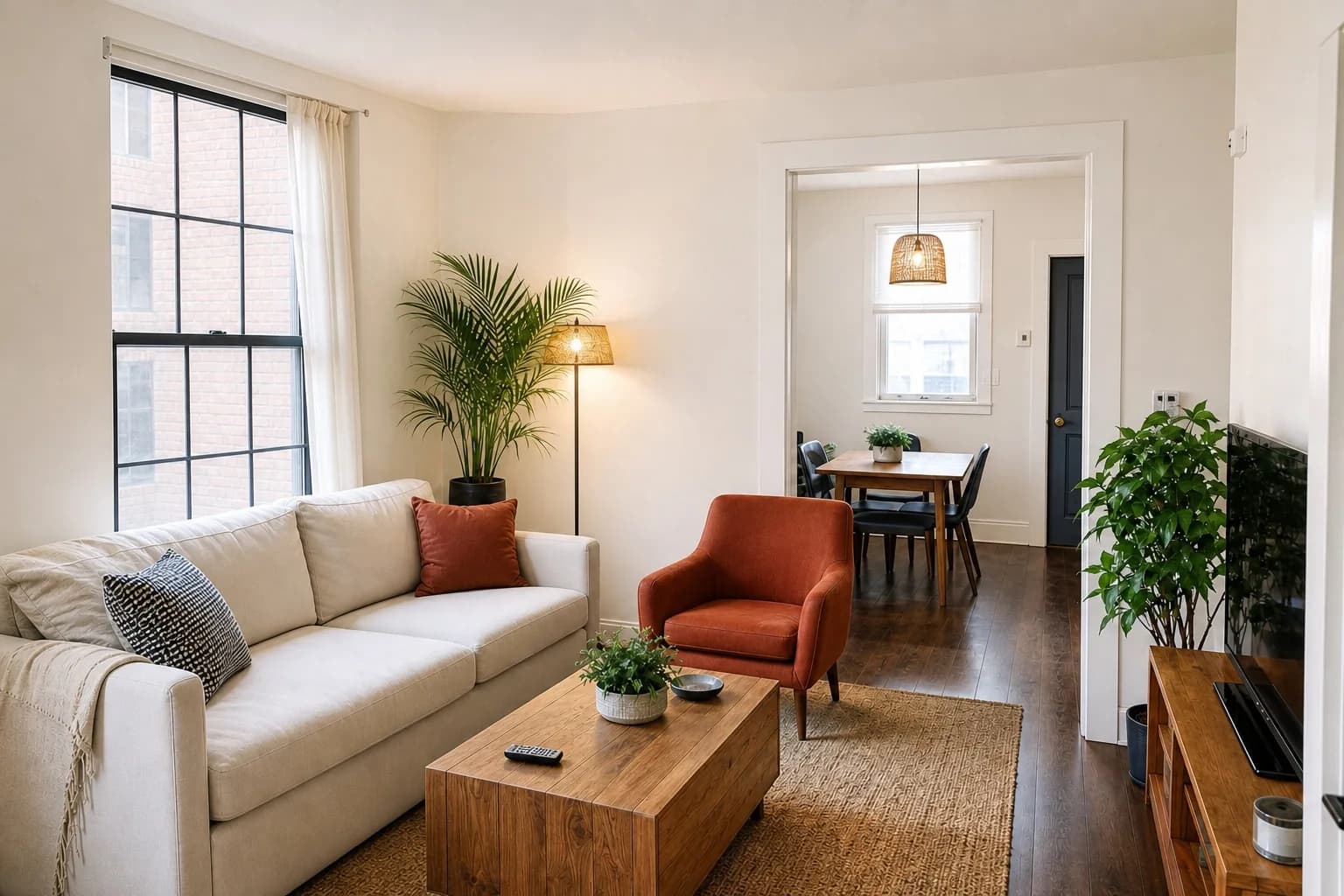
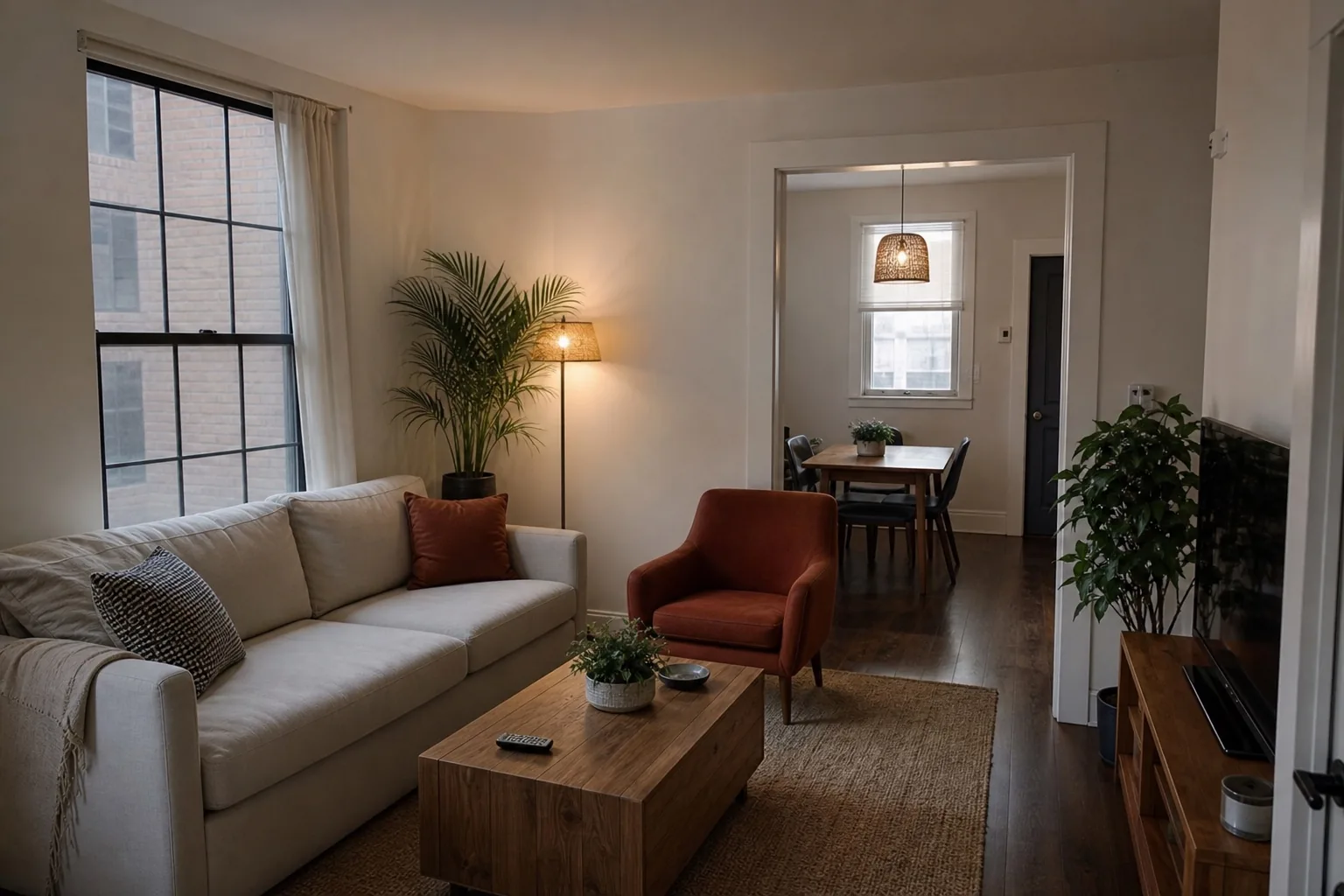
Recover a readable interior and a controlled window view from high-contrast property photos.
A more natural dynamic range, without white rectangles or pasted-in scenery.
The problem
One exposure rarely holds both sides of the glass.
Phone cameras often protect the daylight outside and leave the room dark, or brighten the room until every window becomes blank. Global brightness controls cannot solve both zones independently.
Our method
Treat the window and room as one believable exposure.
ListPik lifts useful shadow information, restrains clipped highlights where source detail exists, and keeps the transition around frames and curtains natural.
One frame can only hold so much range
The brightness difference between a sunlit exterior and a shaded interior is commonly six to eight stops, which is at or beyond what a single phone exposure can record. Within that range, recovery is genuinely possible: the file holds compressed but real information at both ends and correction redistributes it. Beyond it, one end has recorded nothing at all.
This is why the same technique rescues one photo and fails on another that looks superficially similar. The variable is not the room, it is whether the original exposure landed inside the sensor's range. Shooting slightly darker than looks right gives correction far more to work with, because highlight information once clipped cannot be reconstructed while shadow information usually survives.
What must not happen at the glass
The view through a window is a factual claim about the property, and it is the claim most likely to be quietly improved during highlight recovery. A hazy grey outlook that becomes a crisp treeline, or a neighbouring wall that recedes into soft light, changes what the property offers.
Legitimate recovery makes visible what the camera recorded but compressed. The test is whether the recovered view matches what the source file contains when it is examined closely, and whether someone standing at that window on a similar day would see the same thing.
- Expose slightly for the window and lift the room afterwards
- Avoid the phone's automatic HDR mode when you plan to correct later
- Shoot when the sun is not directly on the glass
- Take a second frame exposed for the view as a reference
Where it fits
Use enhancement when the photograph is the problem.
The source is structurally useful
The camera position and important property details are already present, but the photographic finish is weak.
One correction carries the frame
The image needs a focused improvement in light, color, clarity, geometry, or presentation.
A reshoot is disproportionate
The listing deadline is close or one weak frame is holding back an otherwise useful set.
A three-part desk
Fast enough for the deadline. Deliberate enough for the listing.
- 01
Upload the original
Use the largest source file and choose an interior or exterior finishing direction.
- 02
Review the evidence
Inspect the result beside the source. The property should remain immediately recognizable.
- 03
Export with context
Download the approved image and follow the disclosure rules that apply to your listing.
Desk specification
What goes in, what comes back, and what to inspect.
Useful limits are part of a reliable workflow. Start from the best available source and approve the finished frame against visible property facts.
Before you publish
- Confirm the recovered view matches what the original file actually holds.
- Check the transition at the window reveal for halos or grey fringing.
- Verify curtains and frames have not picked up an outline from the correction.
- Confirm the outlook has not become clearer or emptier than the source.
Specific answers
What to know before processing.
Can a completely white window be recovered?+
Only when the original file still contains highlight information. Fully clipped pixels do not hold a reliable view to restore.
Does this add a different exterior view?+
No. The purpose is exposure balance, not view replacement. Compare recognizable details against the source.
Is this the same as HDR?+
It aims for a similar balance from one useful frame, while bracketed professional HDR still offers more source information in extreme scenes.
Start with one frame
Let the comparison make the case.
Packs or optional monthly. One credit per finished photo. Review before you publish.
Open the studio