Dining room photo enhancement
Keep dining spaces square, bright, and honest about seating.
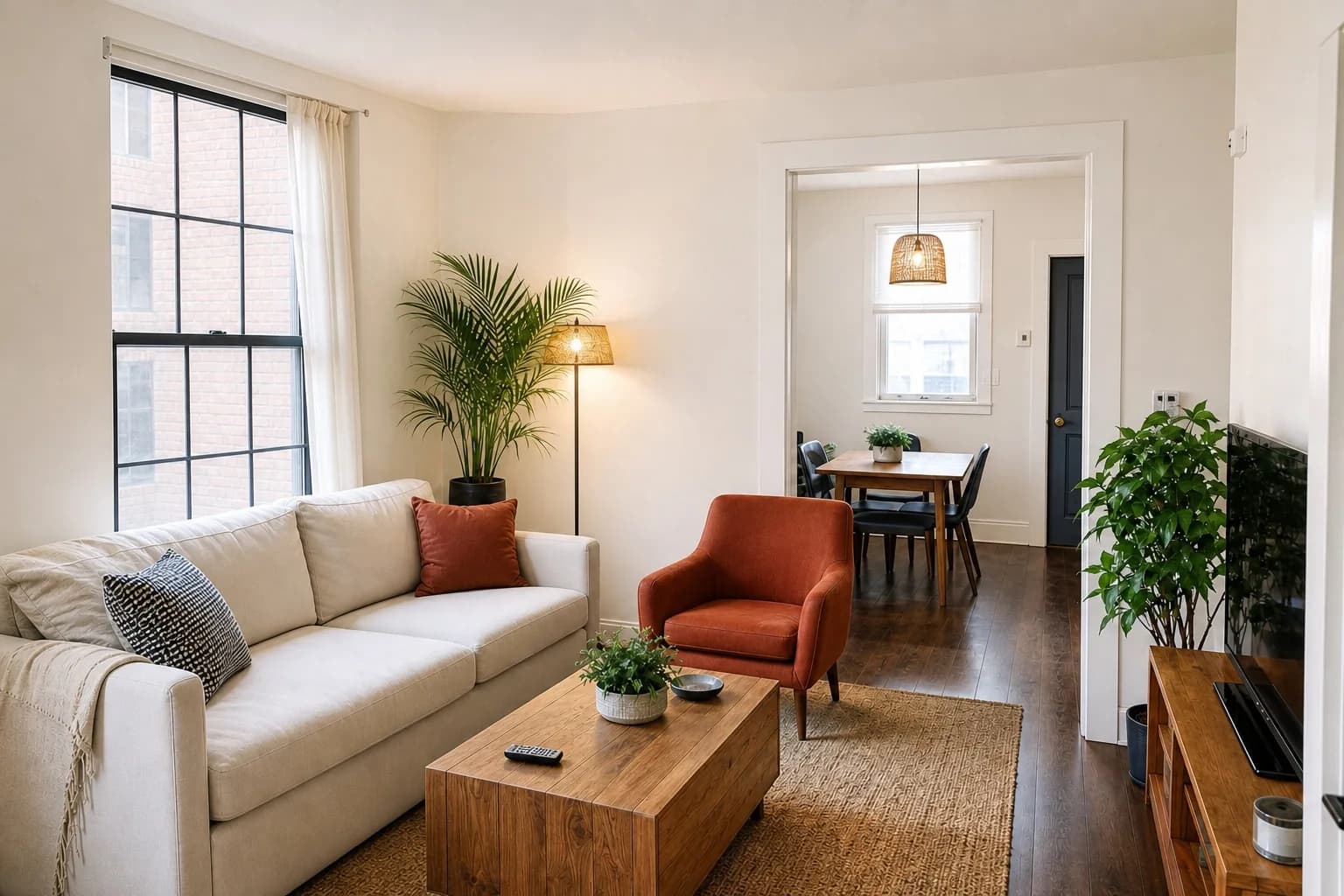
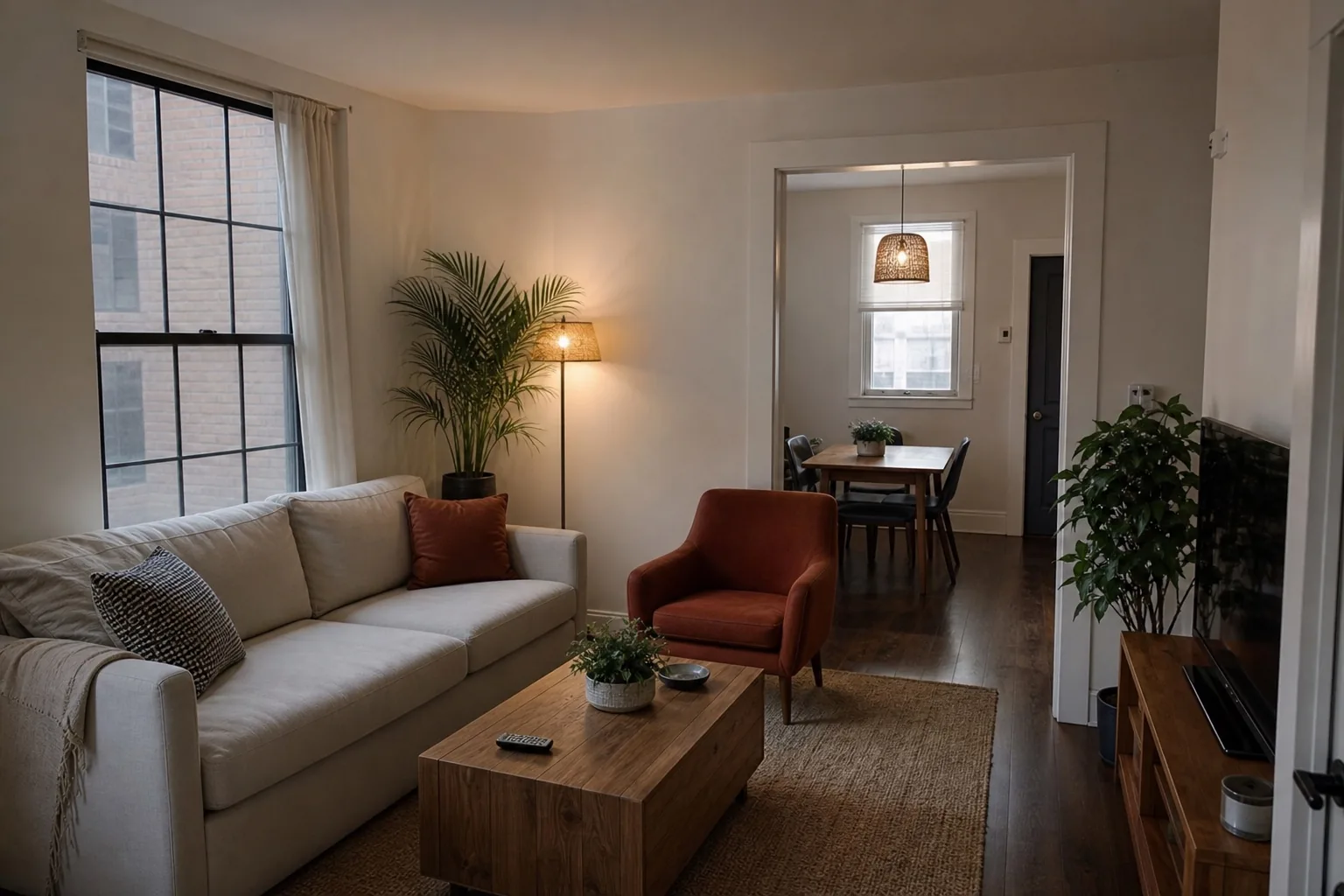
Handle a pendant light over a reflective table, keep the table geometry true, and show how the space connects to the rest of the floor.
A table that seats what the listing says it seats.
The problem
A rectangular table exposes every perspective error instantly.
Most rooms hide a tilted camera. A dining table does not. Its edges are long, straight, and known to be parallel, so a few degrees of camera tilt turns it into a trapezoid that the eye reads as wrong before the brain works out why. A round table under a wide lens becomes an egg.
Our method
Square the table, then deal with the pendant.
ListPik corrects the geometry using the table and the room's architectural lines together, then restrains the pendant or chandelier that is usually hanging directly in the upper third of the frame blowing out. Correcting exposure before geometry means correcting an already-distorted highlight.
Seating count is a claim guests will test
Short-term rental listings state how many people can eat together, and the dining photo is the evidence. A table photographed with four chairs when the listing claims six invites a complaint on arrival, as does a table shot from an angle that makes a cramped six-seater look comfortable. The photograph should be taken with the table laid out as a guest will find it, at the seating count the listing claims.
The same applies to extending tables. If the six-seat configuration requires an extension leaf that lives in the loft, the honest photo shows the table as it stands, and the listing text explains the extension.
Open-plan spaces need the connection in frame
Dining areas are increasingly part of a kitchen or living space rather than a separate room. Photographing the dining table in isolation, tightly cropped, tells a viewer nothing about how the space actually works. What matters is the relationship: how far the table is from the kitchen, whether people can pass behind the chairs, whether the space is one room or two.
A frame that includes the doorway or the kitchen run behind the table conveys that in one image. It also gives perspective correction something architectural to work from, which produces a more reliable geometric fix than a table alone.
- Shoot along the length of the table rather than across it
- Include the connection to the kitchen or living space
- Lay the table at the seating count the listing claims
- Turn the pendant on but expose for the room, not the bulb
Where it fits
Use enhancement when the photograph is the problem.
The table came out trapezoidal
The camera was tilted and the straight edges made the error obvious.
The pendant blew the exposure
A light directly in frame forced the camera to underexpose the room.
The space is open-plan
The dining area needs to be shown in relation to the kitchen or living space, not cropped out of it.
A three-part desk
Fast enough for the deadline. Deliberate enough for the listing.
- 01
Upload the original
Use the largest source file and choose an interior or exterior finishing direction.
- 02
Review the evidence
Inspect the result beside the source. The property should remain immediately recognizable.
- 03
Export with context
Download the approved image and follow the disclosure rules that apply to your listing.
Desk specification
What goes in, what comes back, and what to inspect.
Useful limits are part of a reliable workflow. Start from the best available source and approve the finished frame against visible property facts.
Before you publish
- Confirm the table edges are square and parallel where they should be.
- Count the chairs against the seating capacity stated in the listing.
- Check the pendant or chandelier has not clipped to a featureless white blob.
- Verify the circulation space behind the chairs is not visually widened.
Specific answers
What to know before processing.
Why does my dining table look crooked in photos?+
Because its edges are long and known to be parallel, a small camera tilt is immediately visible. Perspective correction against the room's architectural lines squares it back up.
Should I lay the table for listing photos?+
Lay it simply, at the seating count the listing claims. An over-styled table with full place settings dates quickly and distracts from the space.
How do I photograph an open-plan dining area?+
Include the connection to the kitchen or living space in the same frame. Viewers need the relationship between the areas more than they need a close view of the table.
Start with one frame
Let the comparison make the case.
Packs or optional monthly. One credit per finished photo. Review before you publish.
Open the studio