Comparison · August 21, 2026
Photo enhancement vs virtual staging for listings.
Virtual staging places furniture into a photograph that did not contain it. Enhancement corrects the photograph and leaves the room alone. ListPik does both, deliberately as two separate jobs, because they make different promises to a buyer. Enhancement is documentary: the published image should match what a visitor will find. Staging is a visualization: the furniture is not real, and the listing has to say so. The question is not which product to buy. It is which job the photo in front of you actually needs.
Two jobs, one credit each. Only one of them changes what is in the room.

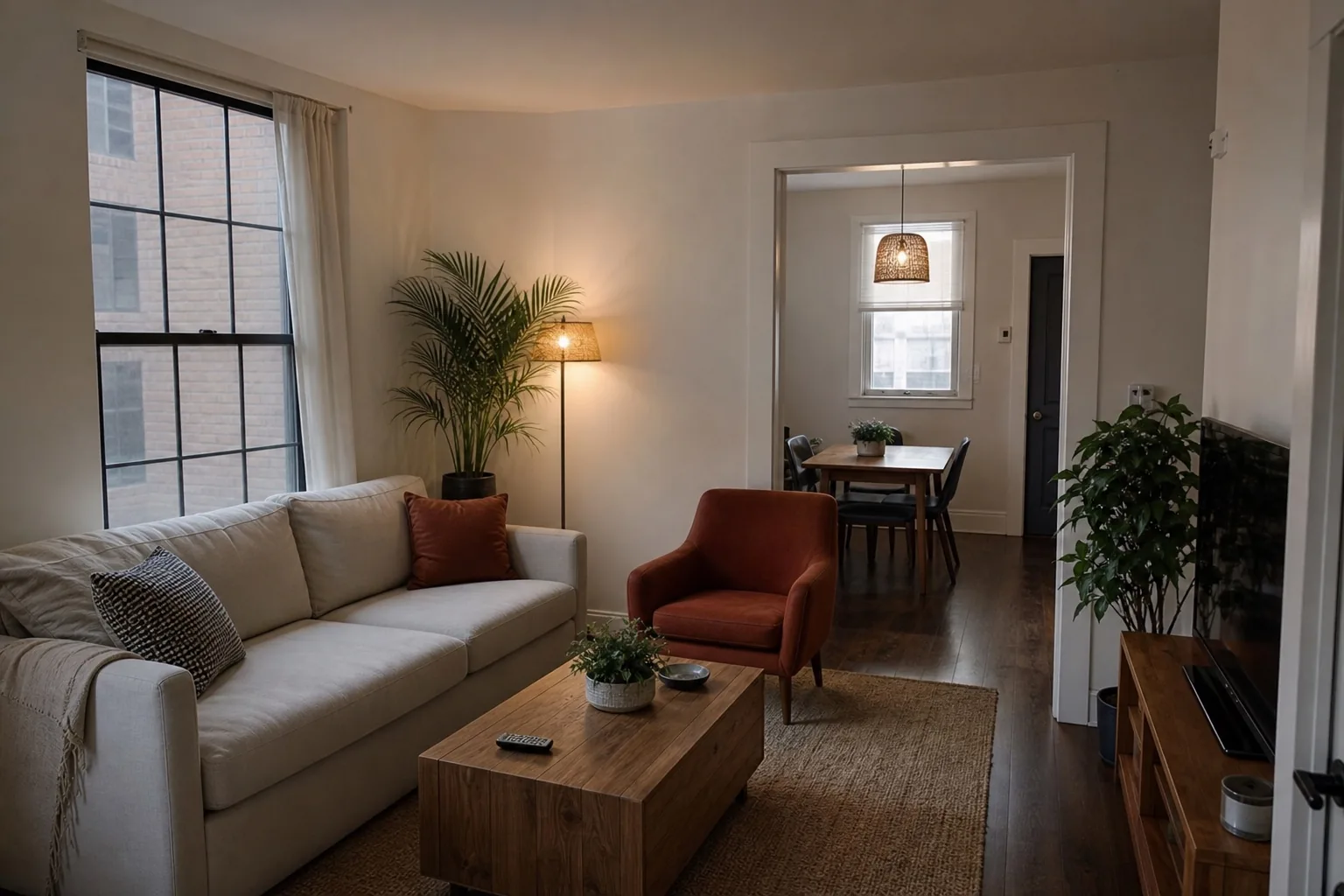
ListPik keeps the source on the desk. The useful question is whether the finished room is still the same property.
The short read
How to choose without a feature-war.
Enhance the photo when the room already contains its real furniture. Stage it when the room is empty and a viewer cannot read the scale. ListPik does both at one credit per photo, and labels the staged one.
Contact sheet
ListPik beside Virtual staging.
Virtual staging is a scene-changing visualization. The table below is the operational difference, not a scorecard.
| Criterion | ListPik | Virtual staging |
|---|---|---|
| What changes | Photographic presentation of what was captured | Contents of the room, and sometimes implied finish |
| Furniture | Stays where it is | Added at believable scale; existing furniture is not removed or replaced |
| Empty rooms | Remain empty, with better light and color if the file allows | Furnished in one of six styles as a labeled visualization |
| Disclosure | Enhancement avoids material change, so no staging label is applied | Required. ListPik burns the label in by default and lets you turn it off |
| Best use | Occupied or already furnished listings with weak photography | Vacant listings that need help reading scale and use |
| Failure mode | Over-finishing a real room | Publishing a furnished fiction without a label |
| ListPik role | One credit per photo, no furniture added | One credit per photo, furniture added and labeled |
| Cost shape | $0.91–$1.20 per finished photo | $0.91–$1.20 per staged photo on ListPik; human staging desks are often $24–$30 per image |
ListPik
Choose photo enhancement when
- The room already contains the real furniture, finishes, and layout.
- The problem is light, color, clarity, or mild camera tilt.
- You need the published image to match what a visitor will see.
- You want a before-and-after check against the original file.
Virtual staging
Choose virtual staging when
- The space is vacant and viewers cannot read scale or function.
- You accept that the result ships with a virtually-staged label.
- Architecture, windows, and dimensions will remain untouched.
- You accept that you are publishing a visualization, not a documentary photo.
The actual differences
Four points that decide the listing.
Enhancement answers a camera problem.
Dark corners, orange bulbs, soft files, and leaning door frames are photographic. They do not require new sofas. If the room is already furnished truthfully, staging it a second time is how listings start to look like catalogs.
Staging answers an emptiness problem.
A vacant house can look smaller and colder than it is. Furniture, even virtual furniture, explains scale. That is a legitimate marketing visualization when the file is labeled and the architecture stays put.
Disclosure is not optional when contents change.
Platforms, brokerages, and local advertising rules differ, but the principle does not: if the photo shows furniture, finishes, or views that a visitor will not find, say so. ListPik is designed so that extra sentence is unnecessary for ordinary lighting and color work.
Do not buy a staging tool to fix exposure.
ListPik offers both, which makes the order matter more, not less. Correct the photograph first so the room is accurately lit and coloured. Only stage if the space is genuinely empty and a viewer cannot read its scale. Reaching for staging to rescue a dark photo adds furniture to a problem that was photographic.
Spend
A finish credit is cheaper because it does less.
On ListPik both jobs cost the same: one credit per photo, from a one-time pack. That is unusual — human staging desks often list $24–$30 per image, because a person is placing the furniture. Equal pricing is not an invitation to stage everything. If the room already contains its real furniture, staging it again costs a credit and buys you nothing but risk.
Desk shape
Correct, then decide whether to visualize.
Start with the original. If the room is true and only the file is weak, enhance and review. If the room is empty and the listing cannot explain itself, use a staging workflow with labels, and keep unstaged originals on file. Mixing the two without saying so is how property images lose trust.
- 01
Upload the original
Use the largest JPG, PNG, or WebP. ListPik finishes one photo per credit.
- 02
Inspect the evidence
Keep architecture, materials, views, and condition recognizable beside the source.
- 03
Publish only the approved frame
Export after the comparison holds up at full size and thumbnail size.
Direct answers
Questions this comparison usually attracts.
Is virtual staging the same as AI photo enhancement?+
No. Enhancement corrects the photograph. Virtual staging changes the contents of the room. They are different jobs with different disclosure duties.
Does ListPik virtually stage rooms?+
Yes, as a separate job from enhancement, at one credit per photo. Staging adds furniture at believable scale and leaves the architecture, dimensions, and visible condition untouched. Staged results carry a burned-in virtually-staged label by default, which you can turn off when a listing needs a clean image. Enhancement, by contrast, never adds furniture.
Should I enhance a photo before staging it?+
Yes, if the original is dark or badly coloured. Enhance first so the staging run starts from an accurate room, then stage that result. Each step costs one credit, and the staged output carries the disclosure label.
Do enhanced photos need to be disclosed?+
Follow the rules that apply to your marketplace, brokerage, and location. Presentation corrections are generally lower risk than staged furniture or altered finishes, but you remain responsible for truthful advertising.
Virtual staging products and vendors vary widely, and third-party prices change. This page describes the category alongside ListPik's own staging. Always follow current portal, brokerage, MLS, and local advertising rules; this is not legal advice.
Start with one frame
Let the original decide the edit.
Packs or optional monthly. One credit per finished photo. Review before you publish.
Open the studio